Washer Won't Drain or Spin? A Step-by-Step Fix
A washer that finishes the cycle with a drum full of water and soaked clothes is really reporting one of two problems: water cannot leave, or the machine refuses to spin because a safety condition is not met. The checks below run from most likely to least, and the first two solve a large share of these calls without a single part.
Step 1: Clean the drain pump filter
Front-load washers have a small access door low on the front panel hiding the pump filter, and it is the number one culprit. Coins, hair pins, socks and lint collect there until water can barely pass. Put towels down, open the door, drain the little hose if your model has one, then unscrew the filter and clear it. Expect a rush of leftover water. Owners who have never opened this door are often shocked at what comes out, and the machine frequently returns to normal immediately.
Step 2: Check the drain hose
Pull the washer forward and inspect the drain hose for kinks, especially if the machine was pushed hard against the wall. Then check the standpipe: the hose should insert loosely, not be sealed in with tape, and its high point should sit roughly 30 to 96 inches above the floor. A hose shoved too deep can siphon; one crushed behind the machine cannot flow at all. While you are back there, make sure the hose is not clogged where it meets the pump.
Step 3: Rebalance and retry
Modern washers refuse to spin at full speed with a badly unbalanced load, and one heavy waterlogged blanket is the classic trigger. Redistribute the load, remove half of an oversized load, and run a drain-and-spin cycle. If the machine drains but only spins slowly with certain loads, balance is your issue, not a failed part.
Step 4: Listen to the lid switch or door lock
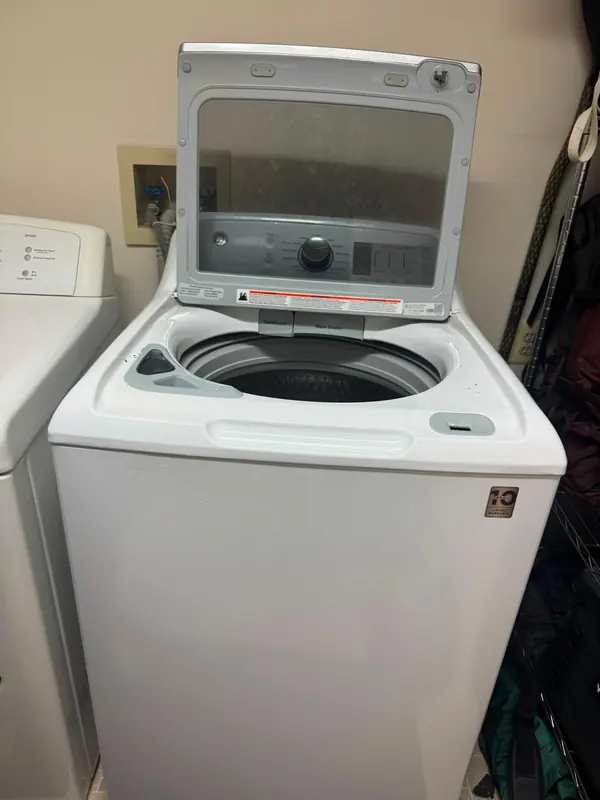
Top-loaders will not spin with a failed lid switch; front-loaders will not start or spin without the door lock engaging. Listen for the click as the cycle begins. No click, or a door that never releases at cycle end, points to the lock assembly, which is an inexpensive and common replacement. Many machines flash a specific error code for this, so note anything on the display.
Step 5: A reset for control glitches
Unplug the washer for two minutes, then run a plain drain-and-spin cycle. Control boards occasionally trap themselves in a fault state after a power blip, and a reset clears it. If the same failure returns on the very next cycle, stop resetting; the machine is telling you a component actually failed.
What is left: belt, pump and control faults
If the drum will not turn at all while the motor hums, a top-loader may have a failed drive coupler or belt. If you hear the pump running loudly but no water moves, the pump impeller may be broken or jammed. And repeated undrained cycles with different symptoms each time suggest a control or sensor fault. All three are diagnosable in one visit with the right tools, and none is worth guessing at by mail-ordering parts.
When to call
Call for repair when the pump filter and hose are clear but water still stands, when the door lock will not release, when the drum will not turn by hand or turns with a grinding noise, or when error codes keep returning. Scoop out standing water and shut the water valves before the visit if the machine must sit for a day or two.
Appliance Surgeon provides same-day washer repair across the region, including Arlington and Springfield. Have the model number and the error code ready when you book.
More guides from our technicians
Front-Load Washer Door Won't Unlock? How to Open It Safely
A locked front-load washer door usually means water inside, a stuck lock or a drain fault. How to open it without breaking the latch, and why it happened.
Electrolux Washer Error Codes: E11, E21, E13 and More
Electrolux washer flashing E11, E21 or E13? Decode the fill, drain and leak-detection faults, run the right checks for each and know when to book a repair.
Front-Load Washer Smells Musty? How to Fix the Odor
Musty smell from a front-load washer comes from biofilm in the gasket, drum and pump. Deep-clean all three, fix the habits feeding it and keep the odor gone.