Is Your Washing Machine Leaking? A Step-by-Step Troubleshooting Guide
To find a washing machine leak, note where the water appears and at what point in the cycle, because each location points to a short list of causes. Water at the door of a front-loader usually means the door seal or excess suds, water behind the washer points to the inlet hoses or the drain hose and standpipe, and water underneath can be suds, a filter or dispenser left open, or an internal part that needs a technician.
Most leaks are found in a few minutes with a flashlight and dry towels. Work through the steps below in order, and stop at Step 1's safety checks if water is anywhere near an outlet or cord.
Where is the water coming from?
Use this table to narrow the search before you start.
| Where and when the water appears | Likely causes | Who should fix it |
|---|---|---|
| Front door, during wash (front-loader) | Dirty, torn or blocked door seal; clothing caught in the door; excess suds | Clean it yourself; a torn seal is a repair |
| Behind the washer, during fill | Loose inlet hose, missing or worn hose washer, cracked hose | You, unless the inlet valve is cracked |
| Behind the washer or at the standpipe, during drain | Clogged or slow household drain, hose pushed too far into the standpipe | You or a plumber |
| Underneath, any time | Excess suds, open bulk dispenser or pump filter, unlevel washer | Start yourself |
| Underneath, every cycle, suds ruled out | Drain pump, internal hose, tub seal | Technician |
Step 1: Make it safe
Stop the cycle. If water has reached an outlet, power strip or the cord, do not touch the plug while you are standing in water; switch off the washer's circuit breaker first. Then close the hot and cold supply valves behind the washer and dry the floor so you can see where new water comes from.
Step 2: Confirm the washer is the source
Water near a washer is not always from the washer. Whirlpool suggests checking nearby laundry tubs, faucets, drain pipes, water heaters and water pipes. GE notes that floors can be uneven, so a leak at the rear can show up at the front, or the reverse. Lay dry paper towels around the base and along the hoses to see where drips actually start.
Step 3: Note when in the cycle it leaks
Timing is the most useful clue. A leak during fill points to the supply side: hoses, hose washers, the inlet valve or the dispenser. A leak during washing points to the door seal, suds or the tub. A leak during drain or spin points to the drain hose, the standpipe or the pump. Whirlpool recommends running an empty test cycle to see whether an overloaded or bulky load caused the leak.
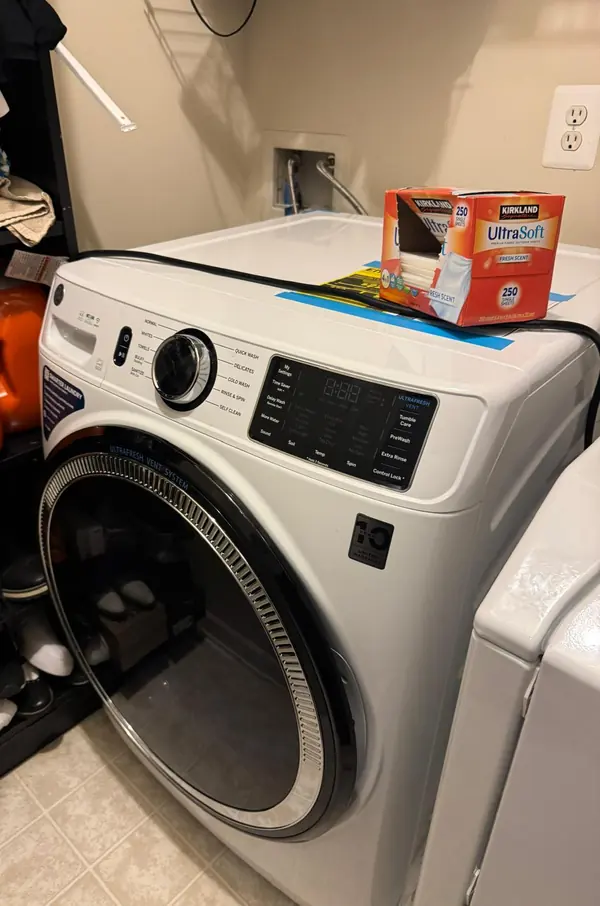
Step 4: Water at the front door (front-loaders)
The rubber door seal, often called the boot or gasket, is the usual culprit. GE advises opening the door, lifting the edge of the gasket and cleaning the underside and folds, where debris and fabric fibers collect. Make sure nothing hangs over the drum edge when you close the door. Whirlpool adds that a torn seal needs replacement, and that the door should latch properly.
Check the dispenser too. GE says detergent pods should go in the drum, not the dispenser, where they will not dissolve, and recommends cleaning the dispenser trays at least once a month.
Step 5: Water behind the washer
Pull the washer out carefully and look at both inlet hoses. Whirlpool advises making sure both ends of each hose have a rubber hose washer, that connections are tight but not over-tightened, and that hot and cold hoses are connected to the correct ports. Look for cracks, bulges, corrosion and holes.
Hoses wear out even when they look fine. Whirlpool suggests considering hose replacement every three to five years, and GE says the fill hose screens and washers should be changed about every five years to prevent leaking.
Step 6: Water during the drain (standpipe overflow)
If water spills from the standpipe or sink as the washer pumps out, the house drain is often the problem. Whirlpool says the household drain must handle at least 17 gallons per minute, and that the drain hose should be secure but not sealed in the drainpipe. GE says a gap is needed between the hose and the standpipe so air can get in, and warns against pushing the hose too far down.
Height matters as well. GE, for example, specifies a discharge height of at least 30 inches for its top-loaders and 24 inches for its full-size front-loaders, and no more than 8 feet (less for compact models); your manual lists the figures for your model. If water backs up and overflows the standpipe during spin, GE notes that this can indicate a household plumbing problem, which is a job for a plumber. If the washer itself is not pumping out, see our guide to a washer that won't drain or spin.
Step 7: Water underneath (suds, filters and leveling)
Too much suds is one of the most common causes of leaks. Whirlpool says to use only HE detergent in its front-loaders, because non-HE detergent or more than the recommended amount can cause excess suds that leak from the washer's rear vent, and too much detergent can clog the overflow tube. It also warns that "no splash" or easy-pour bleach contains thickeners that add suds. GE notes that the softer your water, the less detergent you need.
Next, on models that have them, make sure the bulk detergent dispenser at the base is fully closed, and clean the drain pump filter on front-loaders, which Whirlpool lists as a leak source when dirty. Finally, check that the washer is level and its feet are locked.
Step 8: Know when to stop using the washer
Stop running the washer and keep the supply valves closed until it is repaired if:
- Water reaches electrical outlets, cords or the motor area.
- It leaks from underneath on every cycle after you have ruled out suds and the filter.
- A hose is bulging, cracked or spraying.
- You hear grinding or roaring during spin, or see rust streaks under the washer, which can point to a failing tub seal and bearings.
- The floor under the washer is soft, stained or damaged.
Internal leaks from the pump, inside hoses or tub seal require taking the cabinet apart, and Whirlpool notes that tub problems typically need professional repair.
Example: Say a front-load washer leaves a puddle at the door, but only with large loads. Lifting the door seal shows a sock trapped in a fold and a film of residue, and the household has been pouring more detergent than the cap's fill line. Cleaning the seal, cutting back the detergent and running a test load usually ends that leak; if water still appears with a clean seal, the seal may be torn and need replacing.
Is a leaking washer worth fixing?
Usually, yes. Hoses, seals, pumps and filters are routine, modestly priced parts. Appliance Surgeon's labor starts at $200 and stays there on about 9 in 10 repairs, with parts extra and listed in the quote, as our appliance repair cost guide explains. An older machine with a failing tub seal and bearings is a different case; the repair-or-replace guide walks through that decision. If you would like a technician to trace the leak, Appliance Surgeon's washer repair diagnostic visit is $75 and is credited toward the repair if you approve the quote.
Sources
- whirlpool.com: Whirlpool: door seal cleaning and tears, door latch, too much detergent can cause oversudsing and clog the overflow tube, consider replacing hoses every three to five years, dirty drain pump filter, tub seal needs professional repair, leveling, empty test cycle
- producthelp.whirlpool.com: Whirlpool: hose washers on both ends, tight connections, hot/cold hoses on correct ports, drain must handle 17 gal/min, check household plumbing
- producthelp.whirlpool.com: Whirlpool: use only HE detergent; non-HE or too much detergent causes excess suds and leaks; avoid "no splash" bleach; close bulk dispenser
- producthelp.whirlpool.com: Whirlpool: excess suds can leak from the rear vent; drain hose should be secure but not sealed in the drainpipe; do not over-tighten hoses
- products.geappliances.com: GE front-load washer leaking: clean gasket underside and folds, nothing hanging over the drum, pods go in the drum not the dispenser, clean dispenser monthly, softer water needs less detergent, hose must not be pushed too far into the standpipe (air gap)
- products.geappliances.com: GE washer leaking in rear: fill hose screens and washers should be changed about every 5 years; uneven floors move where a leak appears; standpipe overflow during spin can indicate a household plumbing problem
- products.geappliances.com: GE drain hose information: standpipe at least 1-1/2 inch inside diameter and open to the air; discharge height at least 30 in (top load) or 24 in (front load), no more than 8 ft
More guides from our technicians
Front-Load Washer Door Won't Unlock? How to Open It Safely
A locked front-load washer door usually means water inside, a stuck lock or a drain fault. How to open it without breaking the latch, and why it happened.
Electrolux Washer Error Codes: E11, E21, E13 and More
Electrolux washer flashing E11, E21 or E13? Decode the fill, drain and leak-detection faults, run the right checks for each and know when to book a repair.
Front-Load Washer Smells Musty? How to Fix the Odor
Musty smell from a front-load washer comes from biofilm in the gasket, drum and pump. Deep-clean all three, fix the habits feeding it and keep the odor gone.