Stove Burner Not Lighting? Gas and Electric Fixes
A single dead burner rarely announces a serious failure; it usually announces last night's boilover. Gas and electric stoves fail differently, but both concentrate their problems in a few parts you can inspect in minutes. Start with the pattern: one burner misbehaving points at that burner's own parts, while every burner failing at once points at power, the spark module or the gas supply.
Gas burner clicks but will not light
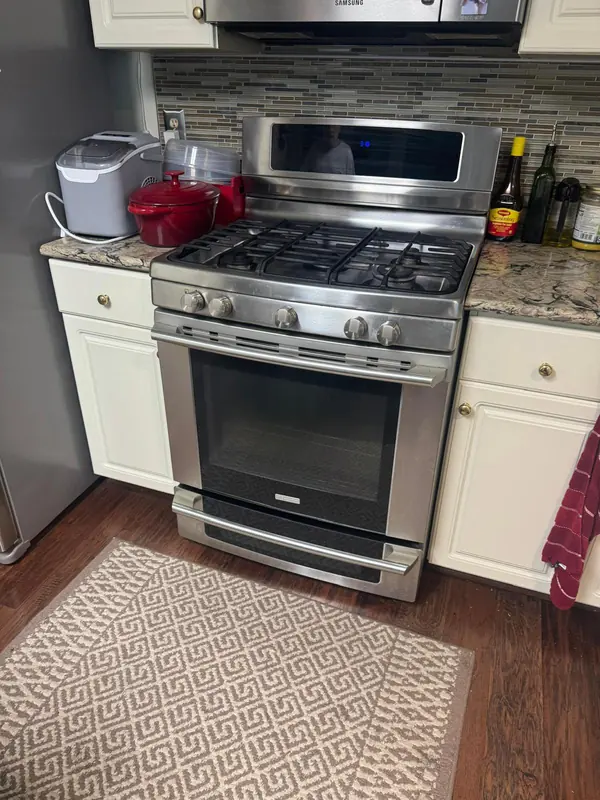
Clicking means the spark system works, so the flame is failing for one of three local reasons. First, moisture: after a boilover or an enthusiastic cleaning, water in the igniter area causes endless clicking with no flame. Dry everything thoroughly and give it an hour; many "broken" burners cure themselves by dinner. Second, alignment: burner caps lift during cleaning and go back crooked, and a cap that is not seated flat breaks the path between spark and gas. Lift the cap and set it down so it sits level and keyed in place. Third, clogged ports: food debris blocks the small flame openings around the burner head. With the burner off and cool, clear the ports with a straightened paper clip or a stiff brush, never a toothpick that can snap off inside.
Clicking that never stops, or no click at all
A burner that keeps clicking after it lights, or clicks with no one touching the controls, usually has moisture in a switch or a shorted igniter switch, and it deserves a repair visit rather than tolerance. The opposite symptom, silence when you turn the knob, points at the spark module or its power, especially if several burners lost their click together. Those burners can often still be lit temporarily with a match held to the port while opening the valve, a legitimate stopgap on a standing-pilot-less range, but the module fix belongs to a technician.
The flame that lights badly
A healthy flame is steady and blue. Yellow, lazy or uneven flames after the ports are clean suggest the air-fuel mix or a partly blocked burner and merit professional adjustment; soot on cookware makes the same point. And a burner that lights, then dies when you release the knob on ranges equipped with flame-failure safety describes a thermocouple-style sensor no longer proving the flame, another quick fix for a technician and not a part to bypass.
Electric burners: coils and radiant elements
On coil-top stoves, a cold burner usually means the coil or its receptacle. Coils plug in: with power off, reseat the coil firmly, and swap it with a same-size neighbor. If the problem follows the coil, replace the coil; if it stays with the position, the receptacle or infinite switch behind the knob has failed, both routine repairs. Look for scorching at the receptacle terminals, a common finding. On smooth-top radiant stoves, a dead zone under the glass is the element or its control, interior work that starts with the power disconnected and generally ends with a service visit.
Safety lines not to cross
Never leave a gas valve open hoping a burner catches, and if you smell gas with everything off, stop, ventilate, avoid switches and call your gas utility before anyone works on the range. Leave gas valves, orifices, regulators and anything behind the range's sealed panels to a professional; the parts are cheap compared to getting them wrong.
When to book
Book repair for endless or spontaneous clicking, a silent spark system, flames that stay yellow, safety-sensor dropouts, receptacle scorching or any smooth-top failure. Appliance Surgeon repairs gas and electric ranges as part of stove repair and cooktop repair across the D.C. area, including Mount Vernon. Note which burner, what you hear and what you have cleaned; it makes the visit short.
More guides from our technicians
Electric Stove Burner Stays on High? The Infinite Switch
Electric burner running full blast on every setting? That is a failed infinite switch and a safety issue. Learn the signs, what to do now and the repair.
Dishwasher Leaking From the Bottom of the Door? 6 Causes
A puddle in front of the dishwasher mid-cycle: gasket, detergent suds, spray arm, float switch, pump seal or a cracked tub, and how to narrow it down.
Dryer Not Turning On? What to Check Before You Call
A completely dead dryer usually has a power, door switch, thermal fuse or start switch problem. The safe order to check them in, and when to stop and call.