The Ultimate Guide to Cleaning Your Oven Without Harsh Chemicals
The safest way to clean most ovens without harsh chemicals is a baking soda paste, left to sit and then wiped off with white vinegar and a damp cloth. For light, recent spills, a steam-clean cycle is often enough, and the self-clean cycle is better kept for heavy buildup, used with a few precautions.
This guide covers the full routine: the oven cavity, the racks, the door glass, steam and self-clean cycles, and the parts you should leave alone.
What do you need?
You do not need anything stronger than what is already in most kitchens:
- Baking soda (about ½ cup)
- White vinegar or lemon juice in a spray bottle
- Water
- Non-scratch sponges, a damp rag and a microfiber towel
- A plastic scraper or spatula
- A stiff brush and mild dish soap or laundry detergent for the racks
- Gloves, and old towels for the floor
Start with the oven off and completely cool, and never clean around a hot element or burner.
How do you clean an oven with baking soda and vinegar?
This method follows Whirlpool's published instructions.
- Empty the oven. Take out the racks, the thermometer, pizza stones and anything else inside.
- Mix the paste. Combine ½ cup of baking soda with about 3 tablespoons of water to make a thin, spreadable paste. Make more if the oven is large or very dirty.
- Spread it on. Coat the walls, floor and inside of the door with gloved hands or a soft brush. Keep the paste off the door gasket, the heating elements and any gas openings (more on these below).
- Let it sit. Whirlpool suggests anywhere from 20 minutes to overnight, depending on how dirty the oven is. Give heavy, baked-on grease the longer end of that range.
- Scrape and wipe. Loosen the thickest residue with a plastic scraper, then wipe with a damp cloth.
- Spray with vinegar. Mist the remaining residue with white vinegar or lemon juice. It will foam where it meets the baking soda.
- Repeat and dry. Wipe again with a clean, damp rag until no white film remains, then dry the cavity.
How do you clean oven racks?
Racks are easier to clean outside the oven. Whirlpool recommends soaking them in a large tub or utility sink with about ½ cup of mild dish soap or ¾ to 1 cup of laundry detergent for at least two hours, or overnight. Scrub with a stiff brush, rinse, and dry them completely before sliding them back in.
If you soak them in a bathtub, lay an old towel on the bottom first so the rack edges do not scratch the finish.
How do you clean the glass door?
With the oven cool, put towels on the floor in front of it. Spread a baking soda and water paste on the inside of the glass, let it sit for 20 minutes or longer, then wipe it away with a wet microfiber towel. A plastic scraper helps with stubborn grease spots. For the outside glass, a vinegar spray and a damp cloth is usually enough.
Grime between the two panes is a different job. Whirlpool notes that reaching it means removing the oven door, which takes a second person, and that taking the door apart can affect your warranty. That is a reasonable point to stop and call for service.
How do steam-clean features work?
Many newer ovens have a steam or "easy clean" cycle that uses water and low heat to soften light soil. It is chemical-free and fast, but it is meant for regular upkeep, not years of buildup.
| Brand feature | Water | Cycle time | Best for |
|---|---|---|---|
| GE Steam Clean | 1 cup poured into the oven bottom | 30 minutes | Small spills and light soil; best results on the door and window |
| LG EasyClean | About 10 oz sprayed on walls and floor | 20 minutes | Light grease splatter and drips such as cheese from pizza |
| Whirlpool steam clean | Varies by model; see your manual | Varies by model | Loosening light grime between deeper cleanings |
After the cycle, wipe out the loosened soil and leftover water. GE says up to ½ cup of water can remain in the bottom of the oven, which is normal. LG recommends the self-clean cycle instead when soil is heavy and baked on.
Is the self-clean cycle safe to use?
The self-clean cycle is designed to be used, but it is the most demanding thing your oven does. Whirlpool says traditional self-clean cycles reach temperatures upward of 800°F and run roughly 1.5 to 3 hours, with some models taking longer. The door locks during the cycle and will not unlock until the oven cools.
Before you run it:
- Move pet birds. Whirlpool warns that some birds are extremely sensitive to the fumes the cycle produces and that exposure can kill certain birds. Move them to another closed, well-ventilated room.
- Ventilate the kitchen. Run the range hood and open a window, and do not block the oven vents.
- Take everything out. Remove racks, pans and foil. Bosch warns that telescopic racks will be damaged if left in during self-clean.
- Hand-clean the edges. The door edge and the 1½ inches around the oven frame do not get hot enough to clean themselves, so wipe those by hand first.
- Stay home. Whirlpool says not to leave the oven unattended while the cycle runs.
Some discoloring, hairline cracks in the enamel and popping sounds can happen during the cycle; Whirlpool describes these as normal. If the door stays locked afterward, GE suggests cutting power at the breaker for 30 seconds, restoring it and trying the door again; never force the latch. If it still will not release, or the oven will not heat afterward, stop and have it checked. Our guide to an oven not heating or heating unevenly covers the usual causes.
Example: Say an oven runs a self-clean cycle the night before a holiday dinner, and afterward the door stays locked and the oven won't heat. Cutting power at the breaker for 30 seconds is the first step GE suggests; if the door still won't release, the lock or a related part needs a technician, which is hard to arrange at the last minute. Running self-clean a few weeks ahead leaves time to deal with problems like this.
What should you never clean or spray?
A few parts are easy to damage with good intentions.
- The door gasket. Whirlpool is direct about this: do not clean, rub, damage or move it, because the gasket is essential for a good seal.
- Heating elements. GE says bake elements generally do not need manual cleaning because soil burns off in normal use. If cleaner gets on the coils, wipe it off with a damp paper towel before heating the oven.
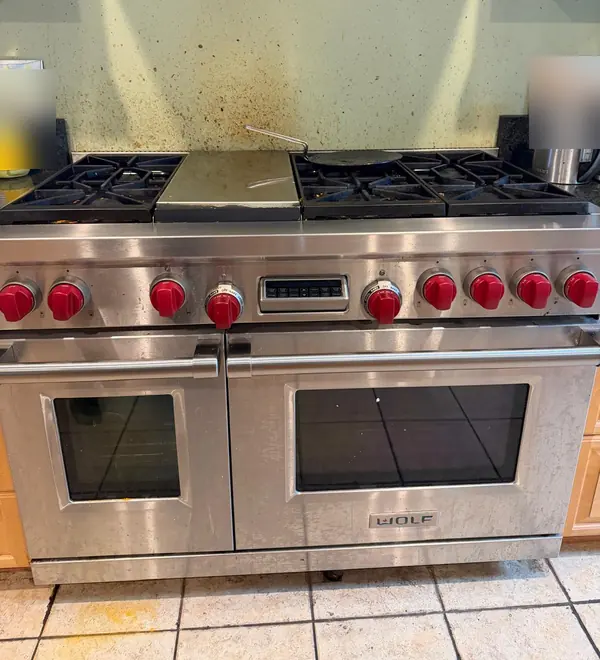
- Gas burner ports. On a gas range, keep paste, liquid and cleaners out of the burner ports. Whirlpool says not to use oven cleaner, bleach or rust remover on cooktop burners, and to clear a clogged port with a straight pin, never a wooden toothpick that can break off inside. On a gas oven, do not remove the oven floor to get at the bake burner; that is a job for a technician.
- Commercial oven cleaner in a self-cleaning oven. Whirlpool advises against it because it can damage the interior finish.
- Foil on the oven floor. Whirlpool warns that lining the bottom with foil or a liner can permanently damage the finish.
- Abrasives. Steel wool, abrasive cleaners and gritty pads scratch porcelain enamel, so skip them inside the oven.
When is it time to call a technician?
Cleaning should never require taking panels off. Call for service if the door will not unlock after a self-clean and a power reset, the oven stops heating or shows an error code after cleaning, the gasket is torn or loose, or you want the glass panes separated and cleaned. Appliance Surgeon's diagnostic visit is $75 for a single oven or $115 for a double wall oven, credited toward the repair if you approve the written quote. See oven repair for the areas we cover, or check typical prices in our appliance repair cost guide.
Sources
- whirlpool.com: baking soda paste ratio, 20 minutes to overnight, vinegar or lemon juice wipe, rack soak method, no commercial cleaners on self-cleaning ovens, between-glass disassembly can affect warranty
- whirlpool.com: glass cleaning steps (cool oven, paste for 20+ minutes, microfiber, plastic scraper); cleaning between panes requires removing the door with a second person
- whirlpool.com: self-clean temperatures upward of 800°F, 1.5 to 3 hours, door locks, move pets and birds, do not leave unattended, no commercial oven cleaners or liner coatings
- producthelp.whirlpool.com: bird fume warning, ventilation, do not block vents, remove racks, hand-clean door edge and 1½ in. frame area, do not clean or move gasket, normal discoloring and hairline cracks
- producthelp.whirlpool.com: do not line oven bottom with foil; no steel wool or abrasive cleaners on porcelain cooktops
- producthelp.whirlpool.com: no oven cleaner, bleach or rust remover on burners; clear ports with a pin, not a wooden toothpick; do not enlarge ports
- bosch-home.com: remove racks before self-clean; telescopic racks are damaged if left in
- products.geappliances.com: GE Steam Clean: 1 cup of water, 30-minute cycle, up to ½ cup water may remain
- lg.com: LG EasyClean: about 10 oz of water, 20 minutes, for light soil; use self-clean for heavy soil
- whirlpool.com: steam cleaning loosens light grime and suits routine upkeep rather than heavy buildup
- products.geappliances.com: heating elements generally need no manual cleaning; wipe spilled cleaner off coils before heating
- products.geappliances.com: door will not unlock after self-clean: cut power for 30 seconds, then try again; do not force the latch
More guides from our technicians
Oven Door Locked After Self-Clean? How to Unlock It
Oven door stuck locked after a self-clean cycle? Wait out the cool-down, run the reset that releases the latch, and learn which parts fail when it stays stuck.
Oven Not Heating or Heating Unevenly? Causes and Fixes
Oven not heating, slow to preheat or burning one side of every tray? Check the bake element, igniter, temperature sensor and convection fan first.
Dishwasher Leaking From the Bottom of the Door? 6 Causes
A puddle in front of the dishwasher mid-cycle: gasket, detergent suds, spray arm, float switch, pump seal or a cracked tub, and how to narrow it down.