How Much Does Appliance Repair Cost? A DC, VA & MD Guide
Short answer: national cost guides put a typical appliance repair at $108 to $251 (HomeAdvisor, average $179) or $129 to $329 (Thumbtack), parts and labor included. Sealed-system work on a refrigerator, such as a compressor, usually costs more than either range. At Appliance Surgeon the diagnostic visit is $75, or $115 for a double unit, and it is credited toward the repair when you approve the quote. Our labor starts at $200 and stays there on about 9 in 10 repairs, up to $450 on complex jobs, with parts extra.
Nobody budgets for a broken dishwasher, so the first question after "can you fix it?" is always "what will it cost?" Exact pricing depends on the diagnosis, but national cost data gives useful ranges, and knowing them helps you spot both a fair quote and a suspicious one. The figures below come from two national cost guides updated in 2026. A specific repair in D.C., Northern Virginia or Maryland can come in above or below them, and your written quote comes after diagnosis, before any work begins.
The service call and diagnosis
Most repair companies charge a diagnostic or trip fee, and reputable ones credit it toward the repair if you approve the work. National guides list technician labor at $50 to $150 an hour (HomeAdvisor), with $75 an hour as the average (Thumbtack). The fee structure matters more than the number: you should always know the full repair price, parts and labor, before saying yes. Appliance Surgeon quotes this way as standard practice: a $75 diagnostic visit ($115 for a double unit), credited toward the repair, and the full price before any work starts. Our repair FAQ covers how visits, quotes and the warranty work.
What Appliance Surgeon charges
- Diagnostic visit: $75 for a single appliance, $115 for a double unit, credited toward the repair when you approve the quote.
- Labor: from $200. About 9 in 10 repairs stay at $200.
- Complex jobs: labor can go up to $450.
- Parts: extra, listed in the written quote before any work starts.
- Evenings and weekends: the same price as weekdays.
So most repairs come to $200 in labor plus the parts, and the $75 you paid for the diagnostic comes off that total. HVAC work is quoted after diagnosis.
Typical ranges by appliance
| Appliance | HomeAdvisor range | Thumbtack average |
|---|---|---|
| Refrigerator | $200 to $300 | $250 |
| Freezer | $90 to $500 | Not listed |
| Oven, range or cooktop | $100 to $500 | $241 (oven) |
| Microwave | $50 to $400 | $220 |
| Dishwasher | $160 to $300 | $220 |
| Garbage disposal | $75 to $250 | $120 |
| Washer | $50 to $450 | $224 |
| Dryer | $100 to $400 | $170 |
| Technician labor | $50 to $150 an hour | $75 an hour |
| Diagnostic visit at Appliance Surgeon | $75, or $115 for a double unit | Credited toward the repair |
Sources: HomeAdvisor, Appliance Repair Costs, updated June 17, 2026; Thumbtack, Appliance Repair Cost, updated March 31, 2026. These are national figures. Sealed-system and premium-brand work can exceed them, and the exact price is confirmed after diagnosis, before any work begins. Microwave, range hood, wine cooler and HVAC repairs are quoted after diagnosis.
Refrigerator repair runs $200 to $300 in HomeAdvisor's data, and Thumbtack's average is $250. The frequent failures are fans, defrost components, thermistors, start relays and door gaskets. Sealed-system work such as a compressor sits well above those figures, which is why it triggers the repair-or-replace conversation on older units.
Washer and dryer repairs cover a wide band: $50 to $450 for washers and $100 to $400 for dryers (HomeAdvisor), with national averages of $224 and $170 (Thumbtack). Frequent jobs include drain pumps, door locks, belts, drive couplers, dryer heating elements, thermal fuses and igniters. Washer suspension and bearing work tends to sit at the top of the range.
Dishwasher repairs run $160 to $300 (HomeAdvisor), with a $220 average (Thumbtack); drain pumps, inlet valves, spray systems and door latches are the usual suspects. HomeAdvisor puts oven, range and cooktop repairs at $100 to $500, and Thumbtack's oven average is $241. Bake igniters and heating elements are routine, while control boards push the top of the range.
HVAC repairs vary the most: simple items like capacitors and igniters can be modest, while blower motors, control boards and refrigerant-system work range from several hundred dollars up. A clear diagnosis matters more here than anywhere else in the house.
What moves the price up or down
Four factors do most of the work. Part cost and availability come first: a stocked OEM fan motor is cheap and same-day, a back-ordered board for a discontinued model is neither. Brand tier is second: premium and built-in brands such as Sub-Zero, Viking and Thermador use costlier parts and more involved disassembly. Access is third: built-in, stacked and cabinet-integrated units add labor time. And complexity is last: sealed-system, gas and electronic-control work takes longer than mechanical swaps.
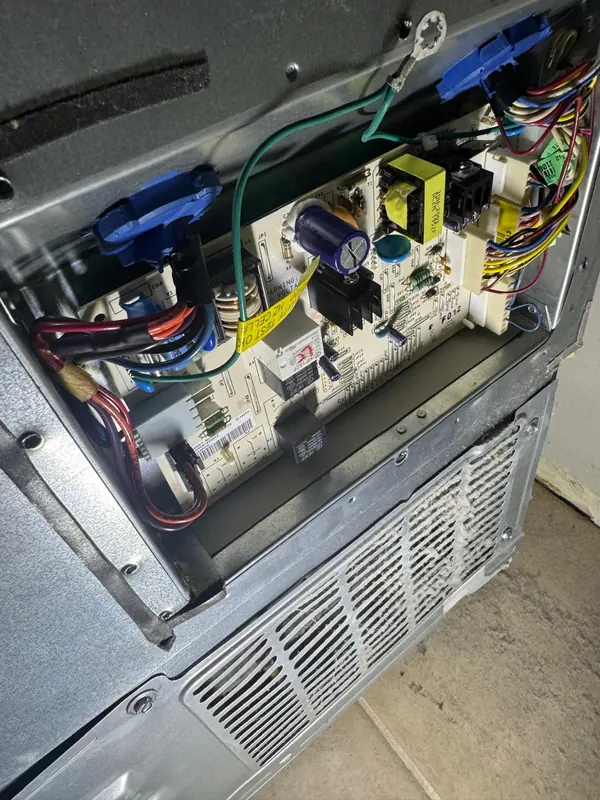
The 50% rule and when repair stops making sense
| Appliance | Estimated life (InterNACHI) |
|---|---|
| Refrigerator | 9 to 13 years |
| Freezer | 10 to 20 years |
| Dishwasher | 9 years |
| Washer | 5 to 15 years |
| Dryer | 13 years |
| Electric range | 13 to 15 years |
| Gas range | 15 to 17 years |
| Microwave | 9 years |
Source: InterNACHI, Standard Estimated Life Expectancy Chart for Homes. Rule of thumb: when a unit is past the midpoint of its typical life and the repair quote is more than half the cost of a comparable new appliance, replacement usually wins.
A useful benchmark: when a repair approaches half the cost of a comparable new appliance, and the unit is past the midpoint of its expected life, replacement deserves a serious look. Below that line, repair usually wins, both financially and in avoided hassle. Our repair-or-replace guide walks through the decision appliance by appliance, and an honest technician will tell you when a repair is not worth your money.
How to keep the visit efficient
Have the brand, model number and a clear symptom description when you book; it lets the technician arrive with the likely parts and finish in one trip. Check current coupons before scheduling, and ask about the workmanship and parts warranty that applies to your specific repair, so the quote you compare is the complete picture.
Appliance Surgeon serves homeowners across Washington, DC, Northern Virginia and nearby Maryland with upfront, diagnose-first pricing. Book online or call with your appliance details for a same-day or next-day appointment where routes allow.
Have a quote in hand? The repair-or-replace calculator compares it with the price of a new appliance and the age of yours.
More guides from our technicians
Appliance Repair in Condos and High-Rises: DC, Arlington and Bethesda
Appliance repair in DC, Arlington and Bethesda high-rises: certificates of insurance, service elevators, compact and built-in units, shared vents, front desks.
How Long Do Appliances Last? Typical Lifespans by Type
Typical service life for refrigerators, washers, dryers, dishwashers, ovens and HVAC equipment - and the habits that stretch or shorten each one.
Who Makes Your Kenmore? A Model Prefix Guide Before Repair
Kenmore appliances are built by Whirlpool, LG, Frigidaire and others. Learn how the model number prefix reveals the real maker and why it matters for repair.