Repair or Replace? A Practical Guide for Your Aging Appliances
Repair an aging appliance unless two things are both true: the quote is about half or more of the price of a comparable new one, and the unit is past the midpoint of its typical life. When both are true, replacement usually wins. Mid-cost repairs such as fans, igniters, door gaskets and pumps are worth doing at almost any age, while sealed-system, control board and transmission failures on an older unit usually tip the decision toward replacing it.
That is the short version. The rest of this guide gives you the numbers to apply it, appliance by appliance, using the same lifespans and price ranges as our appliance repair cost guide.
How does the 50% rule work?
The rule has two parts, and both should be true before replacement becomes the better choice:
- Cost: the repair quote is about half, or more, of what a comparable new appliance would cost you. Comparable means the same type, size and feature level, not the cheapest model on the floor.
- Age: the appliance is past the midpoint of its typical service life.
A big repair on a young appliance is usually still worth it, because you get most of its life back. A small repair on an old appliance is often worth it too, because it costs little to buy a few more years. The rule matters when an expensive repair meets an old machine.
How long do appliances typically last?
Service life below comes from InterNACHI's life expectancy chart, the midpoint (where the 50% rule starts to apply) is half the expected life, and the repair ranges are HomeAdvisor's national figures, updated June 17, 2026 (parts and labor).
| Appliance | Typical life | Midpoint | Typical repair range |
|---|---|---|---|
| Refrigerator | 9 to 13 years | About 5 to 6 years | $200 to $300; sealed system costs more |
| Washer | 5 to 15 years | About 5 years | $50 to $450 |
| Dryer | About 13 years | About 6 to 7 years | $100 to $400 |
| Dishwasher | About 9 years | About 4 to 5 years | $160 to $300 |
| Oven, range or cooktop | 13 to 15 years electric, 15 to 17 gas | About 7 to 8 years | $100 to $500 |
Heating and cooling equipment is priced after diagnosis because systems vary so much. ENERGY STAR suggests considering replacement when a heat pump or air conditioner is more than 10 years old, or a furnace or boiler is more than 15 years old, especially if it needs frequent repairs and your energy bills are climbing. Our HVAC repair page covers diagnosis for furnaces, heat pumps and air conditioners.
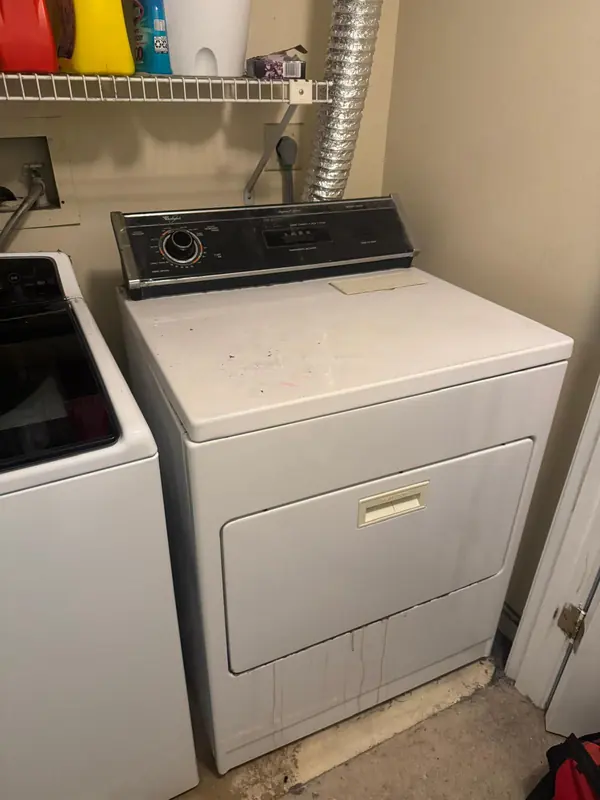
Should you repair or replace? A decision table by appliance and age
| Appliance | Before the midpoint | Past the midpoint | Past typical life |
|---|---|---|---|
| Refrigerator | Repair, including sealed-system work if the cabinet, doors and controls are sound | Repair fans, defrost parts, thermistors, start relays and gaskets; get a replacement price before approving sealed-system work | Repair only lower-cost parts; sealed-system or control board failure usually means replace |
| Washer | Repair | Repair pumps, door locks, belts and couplers; compare bearing or transmission quotes against a new washer | Replace for bearing, transmission or major drive failures |
| Dryer | Repair | Repair; belts, rollers, heating elements, thermal fuses and igniters are usually worth it | Simple parts are still worth fixing; compare a motor or board quote against replacement |
| Dishwasher | Repair | Repair pumps, inlet valves and latches; compare a control board quote against replacement | Replace for a board failure or a leaking tub |
| Oven or range | Repair | Repair igniters and elements; compare control board quotes against replacement | Igniters and elements are still worth fixing; a board on an older unit may favor replacement |
Try it with your own numbers. The calculator below applies the same rule and life ranges: enter the age, the repair quote and the price of a comparable new appliance. It also has its own page, the repair-or-replace calculator.
Repair-or-replace calculator
Enter the appliance, its age, the repair quote and what a comparable new one costs. The answer uses the same service-life figures and 50% rule as our guide.
Which repairs are usually worth it at any age?
Some parts wear out on a schedule, are reasonably priced and leave the rest of the appliance in good shape once replaced. These usually fall inside the typical ranges above:
- Fans: evaporator and condenser fan motors on refrigerators and freezers
- Igniters: oven bake igniters and gas dryer igniters
- Door gaskets: refrigerator and freezer door seals
- Pumps: washer and dishwasher drain pumps
The same goes for belts, door locks, thermal fuses, heating elements and inlet valves. If one of these is the only problem on an otherwise healthy appliance, repair is the sensible choice even on a unit past its midpoint.
Which repairs usually tip the decision toward replacement?
Sealed-system work on refrigerators and freezers. Compressor, leak and refrigerant repairs cost well above HomeAdvisor's $200 to $300 range for typical refrigerator repairs, and only a technician with EPA Section 608 certification may service equipment that could release refrigerant. This is the repair that most often starts the repair-or-replace conversation on an older refrigerator.
Control boards. Boards push repairs toward the top of the typical range, and on discontinued models the part can be back-ordered or hard to find. Ask about availability before approving the job.
Transmissions and tub bearings on washers. Bearing and transmission repairs are among the costliest washer jobs and can run past the typical range, because both mean a full teardown. On a washer near the end of its typical life, replacement is usually the better use of the money.
Do energy efficiency and safety change the answer?
Energy savings are real but usually modest, so treat them as a tie-breaker. ENERGY STAR says certified refrigerators are about 9% more efficient than models that meet the federal minimum, and that an old refrigerator uses roughly 20% more energy than a certified one. It estimates that replacing an old refrigerator with a certified model can save about $150 over the new unit's 12-year lifetime, which rarely justifies replacing a fridge that works. ENERGY STAR certified washers use about 20% less energy and 30% less water than standard ones.
Safety is different, and it can override the math:
- Check for recalls. Search your brand and model at the CPSC's recalls page or SaferProducts.gov before paying for a repair.
- Recurring gas or electrical problems. A gas appliance with repeated ignition trouble, or any appliance that keeps tripping a breaker or smells of burning, should be off until a technician has looked at it.
- Refrigerant leaks. These are never DIY. If the leak repair costs more than half the price of a replacement on an older unit, replace it and have the old one recycled; ENERGY STAR notes many retailers will haul away an old refrigerator when they deliver the new one.
How do you get a quote that makes the decision easy?
A good quote gives you everything you need to apply the 50% rule on the spot:
- Share the model and serial number when you book. The technician can check part prices and availability before arriving.
- Ask for a written quote that separates parts and labor and names the failed part.
- Ask what else is worn. A technician can often spot a torn seal, a noisy bearing or another part that is close to failing.
- Ask about part lead time, especially for boards and older or premium models.
- Ask what the repair warranty covers and for how long. Our guide to repair warranties explains what to look for.
- Price the replacement fully, including delivery, installation and haul-away.
- Do the math. Divide the repair quote by the replacement price and check the age column above.
Example: Say your 11-year-old refrigerator stops cooling and the diagnosis is a failed evaporator fan motor, quoted within HomeAdvisor's $200 to $300 range. The unit is past its midpoint, but the repair is well under half the price of a comparable new refrigerator, so repairing makes sense. If the same refrigerator needed sealed-system work, which costs well above that range, both conditions of the 50% rule could be met, and pricing a replacement first would be the better move.
At Appliance Surgeon, the diagnostic visit is $75 for a single appliance or $115 for a double unit, credited toward the repair if you approve the written quote, and repairs carry a 90-day warranty on parts and labor. For appliance-specific details, see refrigerator repair or washer repair.
Sources
- nachi.org: InterNACHI Standard Estimated Life Expectancy Chart for Homes (appliance service life)
- homeadvisor.com: Appliance repair costs by appliance, updated June 17, 2026
- energystar.gov: Consider replacing a heat pump or AC older than 10 years, or a furnace or boiler older than 15 years; frequent repairs and rising bills
- energystar.gov: ENERGY STAR repair-or-replace criteria for heating and cooling equipment
- energystar.gov: Certified refrigerators about 9% more efficient than federal minimum; old refrigerators use about 20% more energy; replacing an old refrigerator with a certified model saves about $150 over its 12-year lifetime; retailers often pick up and recycle old units
- energystar.gov: Certified washers use about 20% less energy and 30% less water
- epa.gov: Technicians who service equipment that could release refrigerant must be certified
- cpsc.gov: CPSC recall search
- saferproducts.gov: Search recalls and safety reports for products in your home
More guides from our technicians
Appliance Repair in Condos and High-Rises: DC, Arlington and Bethesda
Appliance repair in DC, Arlington and Bethesda high-rises: certificates of insurance, service elevators, compact and built-in units, shared vents, front desks.
How Long Do Appliances Last? Typical Lifespans by Type
Typical service life for refrigerators, washers, dryers, dishwashers, ovens and HVAC equipment - and the habits that stretch or shorten each one.
Who Makes Your Kenmore? A Model Prefix Guide Before Repair
Kenmore appliances are built by Whirlpool, LG, Frigidaire and others. Learn how the model number prefix reveals the real maker and why it matters for repair.