Dryer Takes Too Long to Dry? Causes and Fixes
A healthy dryer finishes a full load of towels in roughly 50 to 60 minutes. When the same load starts taking two or three cycles, the machine is almost never "just getting old." It is telling you that hot, moist air cannot leave fast enough, that heat is weak, or that the sensor deciding when clothes are dry has stopped telling the truth. Airflow is the culprit often enough that it earns the first three checks.
1. The lint screen, properly
Empty it every load, yes, but also wash it. Dryer sheets and fabric softener lay down an invisible film that blocks airflow even on a screen that looks clean. Run water over the screen: if it pools instead of flowing through, scrub the screen with warm soapy water and a brush, dry it and refit. This two-minute fix restores a surprising number of slow dryers.
2. The duct behind the dryer
Pull the machine forward and look at the transition duct. Crushed, kinked or sagging foil ducts choke airflow, and every unnecessary foot and bend adds resistance. Replace flimsy foil with semi-rigid or rigid metal duct, keep the run as short and straight as the room allows, and vacuum out the lint that has been collecting in the low spots.
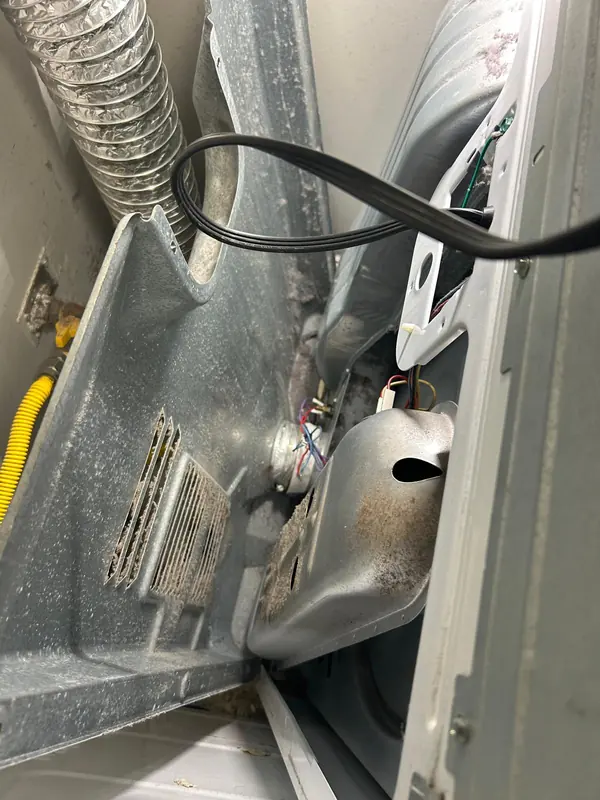
3. The vent run and the exterior hood
Go outside while the dryer runs. The flap at the exterior hood should blow open with confident airflow you can feel. A limp breeze, a stuck flap, a screen packed with lint, or a bird's nest means the vent run needs cleaning end to end. Long runs, especially those routed up through a roof, need this annually. This is the same blockage our dryer vent fire-safety guide covers; slow drying is the polite early warning.
4. Weak or partial heat
If airflow is strong but clothes come out warm and damp, heat is the suspect. Electric dryers run on a 240-volt double breaker; if one leg trips, the drum spins while heat drops to little or nothing, so check the breaker panel and reset the pair fully. A heating element can also fail partially and limp along at reduced output. Gas dryers with a weak igniter or failing coils cycle heat on and off too briefly. Element, fuse and coil diagnosis is quick work with a meter and squarely a technician job.
5. A moisture sensor that lies
Auto-dry cycles trust two small metal strips inside the drum. Coated in softener residue, they read "dry" too early or "wet" forever, ending cycles absurdly short or stretching them long. Wipe the sensor bars, usually just inside the door or on the lint screen housing, with rubbing alcohol on a cloth. If timed-dry works normally while auto-dry misbehaves, this sensor is your problem.
6. Habits that mimic failure
Overloading past two-thirds full, drying heavy and light fabrics together, and a washer that no longer spins water out properly all masquerade as dryer failure. If loads arrive at the dryer wetter than they used to, the washer's spin deserves the investigation.
When to call
Book service when airflow checks out but heat stays weak, when the breaker retrips, when the drum or motor sounds labored, or when a professional vent cleaning is overdue and the run is long or roof-routed. Slow drying costs real money every cycle and shortens the machine's life; it is one of the cheaper problems to fix and one of the more expensive to ignore.
Appliance Surgeon provides dryer repair and vent-related diagnostics across the D.C. metro area, including Reston and College Park. Mention whether timed-dry behaves differently from auto-dry when you book; that detail splits the diagnosis in half.
More guides from our technicians
Dryer Not Turning On? What to Check Before You Call
A completely dead dryer usually has a power, door switch, thermal fuse or start switch problem. The safe order to check them in, and when to stop and call.
Amana Dryer Won't Spin? Belt, Idler and Switch Fixes
Amana dryer hums but the drum won't turn? A snapped belt, tired idler pulley or a belt switch is usually why. Run the hand-spin test and know what to book.
Dryer Squeaking, Thumping or Grinding? What Each Sound Means
A squeal, thump, grind or rattle from the dryer each points at a different part. Match your sound to its cause and learn which noises mean stop now.