Guide for Common Appliance Sounds
Most appliance sounds are normal: refrigerators pop, gurgle and click, dishwashers hum while they drain, gas burners tick until they light, and heat pumps whoosh during a winter defrost. The sounds that deserve attention are new grinding, squealing, banging or loud buzzing, and any noise that comes with a burning smell, smoke, sparks or a gas odor means you should stop using the appliance now.
The normal sounds in the table below come from manufacturer support pages (Whirlpool, GE Appliances, Trane, Lennox and InSinkErator); the warning causes reflect general repair knowledge and are the usual suspects, not a diagnosis. Use it to sort "that's just the ice maker" from "turn it off and call someone."
Which appliance sounds are normal, and which are warnings?
| Appliance | Normal sounds | Warning sounds | What the warning usually means |
|---|---|---|---|
| Refrigerator | Compressor and fan hum; clicks as controls switch; gurgling refrigerant; popping as the walls expand and contract; buzzing water valve while the ice maker fills; sizzling as defrost water hits the heater | Clicking every few minutes with little or no cooling; grinding, chirping or squealing from the freezer or the back; buzzing about every 15 minutes with no ice | Compressor start problem; failing evaporator or condenser fan motor, or ice hitting a fan blade; ice maker trying to fill with no water supply |
| Freezer | Popping or cracking during cool-down or defrost; sizzling or hissing during defrost; steady hum | Scraping or grinding from the fan area; compressor clicking on and off while the freezer warms | Iced-over or failing fan; compressor start problem |
| Washer | Lid lock clicking at the start; motor hum during wash and spin; drain pump hum that gets louder near the end of draining; a clunk as it shifts from agitate to spin | Loud banging in spin; grinding or roaring that rises with spin speed; knocking or rattling | Unbalanced load or unlevel washer; worn tub bearings or drive parts; coins or loose hoses |
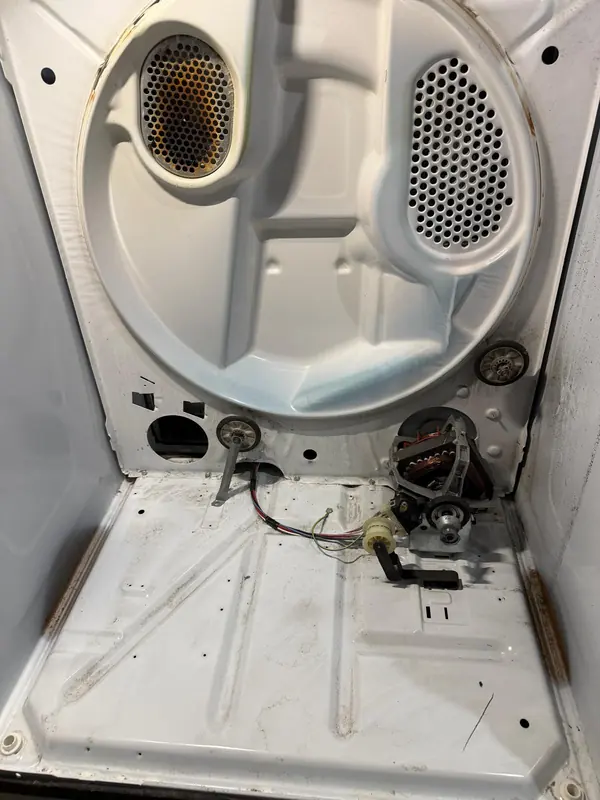
| Dryer | Gas valve clicking several times per cycle (gas models); light thumping for a few minutes after sitting unused; zippers and buttons tapping | Thumping that never fades; squealing or squeaking; scraping; constant pounding | Worn drum rollers, idler pulley or belt; a coin or pin caught at the drum seam; unlevel dryer |
| Dishwasher | Rushing water on fill; swishing spray; drain pump hum; light clicking from the inlet valve; snap of the detergent door | Grinding or loud rattling during wash or drain; humming with no water moving | Glass, a bone or a pit in the pump area; stalled pump |
| Oven and range | Burner igniter clicking until the flame lights and a soft whoosh as the oven burner catches (both can repeat every 1–3 minutes during a cycle); cooling fan running during and after cooking; convection fan cycling; ticking as metal heats and cools | Surface igniters clicking when every burner is off; a loud pop, bang or boom when the oven burner lights; any gas odor | Moisture or a faulty spark switch; delayed ignition, often a weak oven igniter; possible gas leak |
| Microwave | Hum from the magnetron and fan; relay clicks, especially at lower power levels; vent fan noise on over-the-range models | Sparks, crackling or popping flashes; loud buzzing or grinding; running with the door open | Metal inside or damaged interior; electrical fault inside the unit |
| Furnace or heat pump | Rush of air from the blower; clicks of the ignition sequence; heat pump defrost: a swoosh, the outdoor fan stopping and a cloud of steam for a few minutes | Loud boom when the burners light; squealing or grinding from the blower; loud electrical buzzing; heat pump stuck in defrost or covered in ice | Burners lighting late; blower motor or bearing wear; electrical fault; defrost problem |
| Garbage disposal | Brief grinding while food goes through with the water running; motor whir | Humming with no grinding; metallic clanking; silence after a hum | Jammed flywheel; metal object inside; tripped overload protector |
A few that surprise people
GE Appliances lists a loud bang from a refrigerator's water line (water hammer from high supply pressure) and a squeak from a tight new door gasket as normal. Whirlpool notes that thumping after a dryer sits unused comes from drum rollers that flattened and will round out again. Trane says the cloud of steam from an outdoor unit during defrost is melting ice and is normal.
Which appliance sounds mean stop using it now?
Stop the appliance and get help for any of these:
- A gas smell, with or without a hissing sound. Leave the area, leaving doors open if you can. Washington Gas says not to switch lights or appliances on or off or use a phone nearby, and to call 911 and its leak line at 844-WASHGAS (927-4427) from a safe place. Other utilities' customers should use their own emergency number.
- A burning smell, smoke or sparks. If it's safe, turn the appliance off and unplug it or switch off its breaker. If there is smoke or flame, get everyone out and call 911. Lennox says to turn a furnace off and call a professional if buzzing comes with a burning smell, flickering lights or a tripped breaker. An appliance that keeps tripping its breaker should stay unplugged until it has been checked.
- A loud bang or boom. From a furnace as the burners light, turn the heat off at the thermostat and have it inspected before using it again. From any appliance that then loses power, leave it off.
- Metal-on-metal grinding. Stop the washer or dryer cycle. For a disposal, InSinkErator says to switch it off and never put your hand inside; free a jam with the hex wrench in the bottom of the unit, remove objects with tongs or pliers, and press the red reset button underneath if it went silent.
- Microwave sparking that continues with nothing metal inside, or a microwave that runs with the door open. The FDA says to stop using a microwave that keeps operating with the door open and not to use one whose door is bent, warped or doesn't close firmly. The parts behind the cabinet run at dangerous high voltage; read why microwave repair is never DIY.
One more sound outranks all of these: a carbon monoxide alarm. The CPSC says to move outside to fresh air immediately and call 911 rather than looking for the source.
What can you check yourself before calling?
Many noise complaints have simple causes. For washers, Whirlpool's guidance is to redistribute an unbalanced load, adjust the leveling feet, empty pockets and strap down hoses that knock against the cabinet. For dryers, check pockets for coins and pins and level the machine; loose sneakers will also make a dryer thump. For refrigerators, make sure nothing on top is vibrating and the cabinet isn't touching anything.
Unplug the appliance, or turn off its breaker or gas supply, before looking inside a panel. Refrigerant, gas connections, live wiring and microwave internals are technician work.
How do you describe a noise to a technician?
A good description often points to the failed part, so the right part can arrive on the first visit. Before you call, note:
- When it happens: at start-up, during fill, wash, spin, drain or defrost, or right after the appliance shuts off
- Where it comes from: front, back, bottom, inside the freezer or the outdoor unit
- What it sounds like: click, hum, buzz, grind, squeal, thump or bang
- What changed: new noise, louder noise, or noise plus poor cooling, heating or draining
- The model number: usually on a label inside the door, on the frame or on the back
A short phone video of the noise also helps. If a refrigerator is clicking and not cooling, our post on compressor clicking explains the likely causes. For heating noises, see HVAC repair.
Example: Say a refrigerator starts chirping or squealing from the back of the freezer, a sound it didn't make last month, and the freezer is slowly warming. That combination points to a failing evaporator fan motor or ice touching the fan blade, not a normal sound. Noting when it happens and recording a short video helps the technician bring the right part.
If the noise turns out to be a worn part, Appliance Surgeon's $75 diagnostic visit is credited toward the repair when you approve the written quote. Our repair cost guide shows typical D.C.-area ranges so you know what to expect.
Sources
- producthelp.whirlpool.com: Normal refrigerator sounds: buzzing water valve, gurgling refrigerant, popping walls, sizzling defrost, clicking relays, humming
- products.geappliances.com: Normal refrigerator sounds incl. defrost timer clicks, ice maker buzzing every 15 minutes without water, water hammer bang, new gasket squeak
- producthelp.whirlpool.com: Freezer popping/cracking is normal
- producthelp.whirlpool.com: Freezer sizzling during defrost is normal
- producthelp.whirlpool.com: Lid lock click normal; loose items and hoses cause clicking/knocking
- producthelp.whirlpool.com: Motor and drain pump hum are normal
- producthelp.whirlpool.com: Clunking from unbalanced load, unlevel washer, foreign objects; agitate-to-spin clunk is normal
- producthelp.whirlpool.com: Gas valve clicking normal; thumping, pounding, scraping, rattling causes
- producthelp.whirlpool.com: Roller noise on new dryers; thumping from flattened rollers after non-use
- producthelp.whirlpool.com: Normal dishwasher sounds: rushing water, drain pump hum, spray, inlet valve, dispenser
- producthelp.whirlpool.com: Igniter clicks until flame detected; may repeat every 1–3 minutes
- producthelp.whirlpool.com: Cooling fan runs during and after cycles; convection fan cycling is normal
- products.geappliances.com: Normal microwave hum, relay clicks at lower power, vent fan noise
- fda.gov: Don't use a microwave with a damaged door; stop if it runs with the door open
- trane.com: Defrost is normal: swooshing sound, outdoor fan stops, steam; call if constant defrost or ice buildup
- lennox.com: Furnace buzzing causes; turn off and call if buzzing comes with burning smell, flickering lights or tripped breaker
- insinkerator.com: Jammed disposal: switch off, never hand inside, hex wrench, tongs, red reset button
- washingtongas.com: What to do if you smell gas; 911 and 844-WASHGAS (927-4427)
- cpsc.gov: CO alarm: move outside and call 911; don't search for the source
- producthelp.whirlpool.com: a whoosh as the gas ignites is normal and can repeat every 1–3 minutes
More guides from our technicians
Appliance Repair in Condos and High-Rises: DC, Arlington and Bethesda
Appliance repair in DC, Arlington and Bethesda high-rises: certificates of insurance, service elevators, compact and built-in units, shared vents, front desks.
How Long Do Appliances Last? Typical Lifespans by Type
Typical service life for refrigerators, washers, dryers, dishwashers, ovens and HVAC equipment - and the habits that stretch or shorten each one.
Who Makes Your Kenmore? A Model Prefix Guide Before Repair
Kenmore appliances are built by Whirlpool, LG, Frigidaire and others. Learn how the model number prefix reveals the real maker and why it matters for repair.