October 2026 · Arlington, VA
A 48-inch Monogram dual-fuel range to install.
We replace freestanding and slide-in stoves, gas, electric and dual-fuel, in the space your old one leaves. The old range comes out, the new one is connected, leveled and locked into its anti-tip bracket, and every burner and the oven are tested before we leave.
Schedule stove and range installation
Monday - Friday: 8 AM to 10 PM
Saturday: 8 AM to 10 PM
Sunday: 10 AM to 10 PM
Quoted before work begins.
Haul-away of the old unit included.
Shut-off and connector. A gas range needs a shut-off valve behind it that you can reach. We check that valve, connect the range with a new flexible connector when the old one cannot be reused, and leak-test every connection we touch.
Burners and oven. We light each burner to check the ignition and a steady blue flame, then run the bake and broil burners to confirm the oven lights and heats.
Natural gas or propane. Ranges ship set up for natural gas, which most homes in the area use. If your home runs on propane, say so when you book, because the range needs the maker’s conversion parts first.
Power for the igniters. A gas range plugs into a standard outlet behind it, which powers the spark igniters, the oven igniter and the controls.
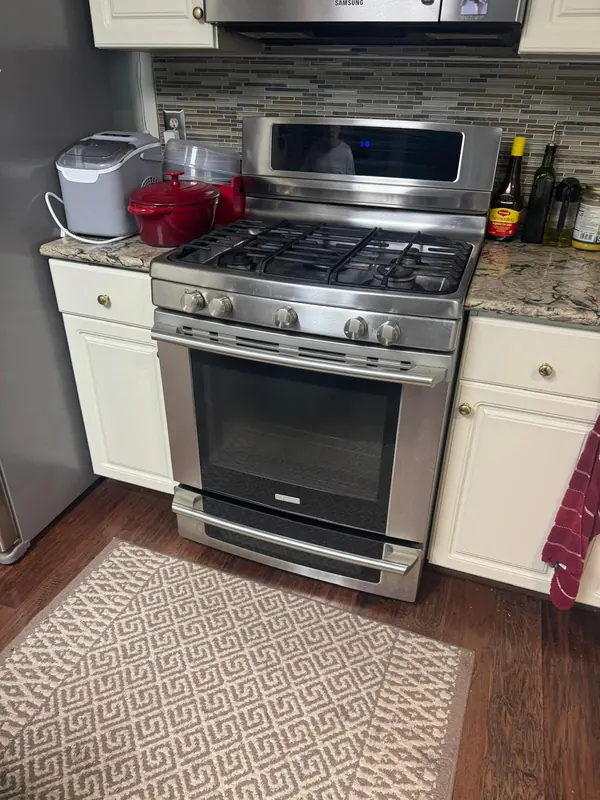
A cord to match the outlet. Most electric ranges come without a power cord. We supply a 240-volt cord of the type your outlet takes, three-wire or four-wire, and set the ground connection the way the range’s instructions require for that cord.
Dual-fuel ranges. A dual-fuel range has a gas cooktop and an electric oven, so it needs both a gas connection and a 240-volt outlet. Check that both are in place before the range is delivered.
Changing fuel. Going from electric to gas, or from gas to electric, means a gas line or a 240-volt circuit has to be run first by a gas fitter or an electrician. Once that connection is in place, we install the range.
Large pro-style ranges. 36-inch and 48-inch ranges are heavy and often call for a specific gas connection and a dedicated circuit. Send the model so we can check its spec sheet against your kitchen before the visit.
Anti-tip bracket. Ranges come with a small floor or wall bracket that locks one rear leg in place. Without it, a child standing on the open oven door can pull the whole range over. We fasten the bracket, push the range back until the leg seats in it and test that it holds.
Width and depth. Most freestanding ranges are 30 inches wide, and slide-in models sit between the cabinets with the countertop running over their edges. Check the width of the opening and the depth to the wall before you buy, so the range sits flush.
Leveling. We level the range front to back and side to side, so pans do not drift and the oven bakes evenly.
The old range. It is disconnected, moved out without marking the floor and hauled away.
Range installation requests from our booking form, by month and town, newest first.
A 48-inch Monogram dual-fuel range to install.
A new electric range of the same size to replace the old one, with an estimate first.
Each stove installation is quoted before work begins. The quote depends on gas or electric, whether a new connector or cord is needed and the size of the range. Taking the old range away is included.
When the old stove just needs a part, stove and range repair may save the replacement. Cooktops and wall ovens have their own pages: cooktop installation and wall oven installation.
Only after a gas fitter has run a gas line to the space. Once the line and a shut-off valve are in place, we connect the range and leak-test it.
Usually yes, because the range arrives without one. We bring the cord type your outlet takes, three-wire or four-wire.
Yes. Before we leave, every burner is lit or heated and the oven is run on bake and broil.
Yes. Send the model number when you book. A dual-fuel range needs gas and a 240-volt outlet, and wide pro-style ranges often have their own gas and power requirements, so we check the spec sheet against your kitchen first.