Range Hood Fan Weak or Loud? Causes and Fixes
A range hood that no longer clears steak smoke, or that announces dinner with a rattle, is usually suffering from the most fixable problem in the kitchen: grease. Air that carries cooking oil coats everything it passes, and the hood is the thing it passes first. Start there, then work outward along the duct.
The filters, properly cleaned
Pop out the metal mesh filters and look through them at a light; if you cannot, neither can air. Soak them in hot water with degreasing dish soap, scrub, rinse and dry, or run them through the dishwasher if the manufacturer allows. Do this monthly with regular cooking. Recirculating hoods add a charcoal filter behind the mesh that cannot be washed and needs replacement every few months; a spent charcoal filter is why a ductless hood "stops working" while running perfectly.
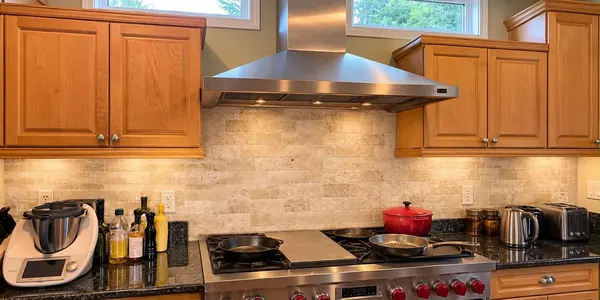
The damper and the duct
Ducted hoods exhaust through a pipe with a one-way damper flap, and a flap glued half-shut by grease, or a duct crushed, disconnected or clogged in the wall or attic run, strangles airflow no matter how healthy the motor is. Weak suction with a strong-sounding motor points here. At the exterior wall or roof cap, check for a stuck flap, lint mats and the occasional bird nest. This is also where a mystery kitchen draft comes from when a damper fails open.
Noise: what the sound says
A rattle that changes when you press lightly on the housing is loose hardware or a filter not seated. A rhythmic tick is usually the fan blade catching grease buildup or a foreign object; clean the blade and the sound often leaves with it. A grinding or groaning that grows over weeks is the motor's bearings retiring, and a hum with no spin is a seized motor or failed capacitor. Motors, capacitors and the multi-speed switches that die one speed at a time are all standard, single-visit repairs.
Why it matters beyond comfort
The hood is the appliance protecting every other surface in the kitchen, including the cabinets and the cooktop's electronics, from grease film and moisture. A working hood is also part of the answer to lingering odors and smoke alarms that cry at every sear; pair it with the maintenance habits in our Stove Burner Not Lighting? Gas and Electric Fixes and the whole cooking zone ages slower.
When to book
Book repair for motor noise, dead speeds, lights out with fan working or the reverse, or weak airflow that survives clean filters and a clear duct. Appliance Surgeon provides range hood repair across the region, including Arlington and Bethesda. Note the brand, whether it is ducted or recirculating, and which speeds still work.
More guides from our technicians
Oven Temperature Wrong? When to Calibrate and When to Repair
Test with an oven thermometer, use the hidden calibration offset, and learn which patterns mean a bad temperature sensor, element or igniter instead.
Dishwasher Leaking From the Bottom of the Door? 6 Causes
A puddle in front of the dishwasher mid-cycle: gasket, detergent suds, spray arm, float switch, pump seal or a cracked tub, and how to narrow it down.
Dryer Not Turning On? What to Check Before You Call
A completely dead dryer usually has a power, door switch, thermal fuse or start switch problem. The safe order to check them in, and when to stop and call.